El Tiempo Digital Archive
Colombia's Newspaper of Record
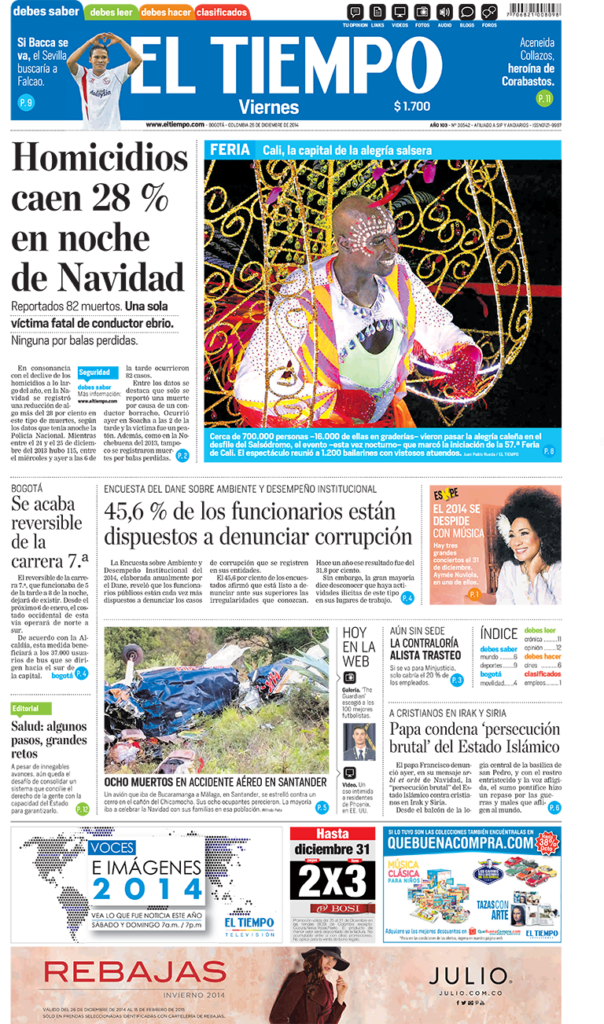
El Tiempo Digital Archive provides unparalleled access to Colombia’s newspaper of record during one of the most transformative eras in Colombia’s modern history. Spanning from 2005 to the present, this collection captures the daily record of a country navigating the complexities of internal conflict, economic modernization, and unprecedented political shifts.
As the primary national daily, and for a significant period between 2001 and 2008, the country’s only newspaper with national circulation, El Tiempo (The Times) served as the essential platform for documenting the implementation of the “Democratic Security” policy under the Álvaro Uribe administration and the subsequent evolution of the Colombian state’s approach to the long-standing FARC insurgency.
The El Tiempo Digital Archive is an indispensable resource for scholars of Latin American politics, peace and conflict studies, and investigative journalism. The archive offers a detailed primary-source perspective on the landmark 2016 Peace Agreement with the FARC, the social upheavals of the “Paro Nacional,” and the historic transition to the nation’s first leftist presidency under Gustavo Petro. Beyond high-level politics, the archive tracks Colombia’s emergence as a key regional economic power, its struggles with narcotrafficking, and the vibrant cultural and social movements that have redefined Colombian identity in the 21st century.